


Visiting Bolivia was sort of an accident, and our first diversion from our 3 countries in 6 months plan. We originally thought we’d work our way down slowly on buses from Peru into northern Chile, but we had some good friends coming to visit that were interested in going to Patagonia (i.e. the very tippy end of the continent). Chile is that lonnngg skinny country on the map that looks like a subway sandwich – when rotated ninety degrees I believe it wraps around the world thrice – so the most practical option was flying. We were happy to make this change as Patagonia was high on our list and not a place we probably would have made it on our own, but to fly, we had to find our way to the nearest large city. Enter: La Paz, Bolivia.
After crossing the Bolivian border and spending a few days in Kristy’s beloved Copacabana (I believe the breakdown of her adoration was 5% natural beauty, 5% weather and 90% jugo de platano con leche, which is essentially a banana flavored milkshake that she had at least once daily), we bused the additional three hours to Bolivia’s capital.
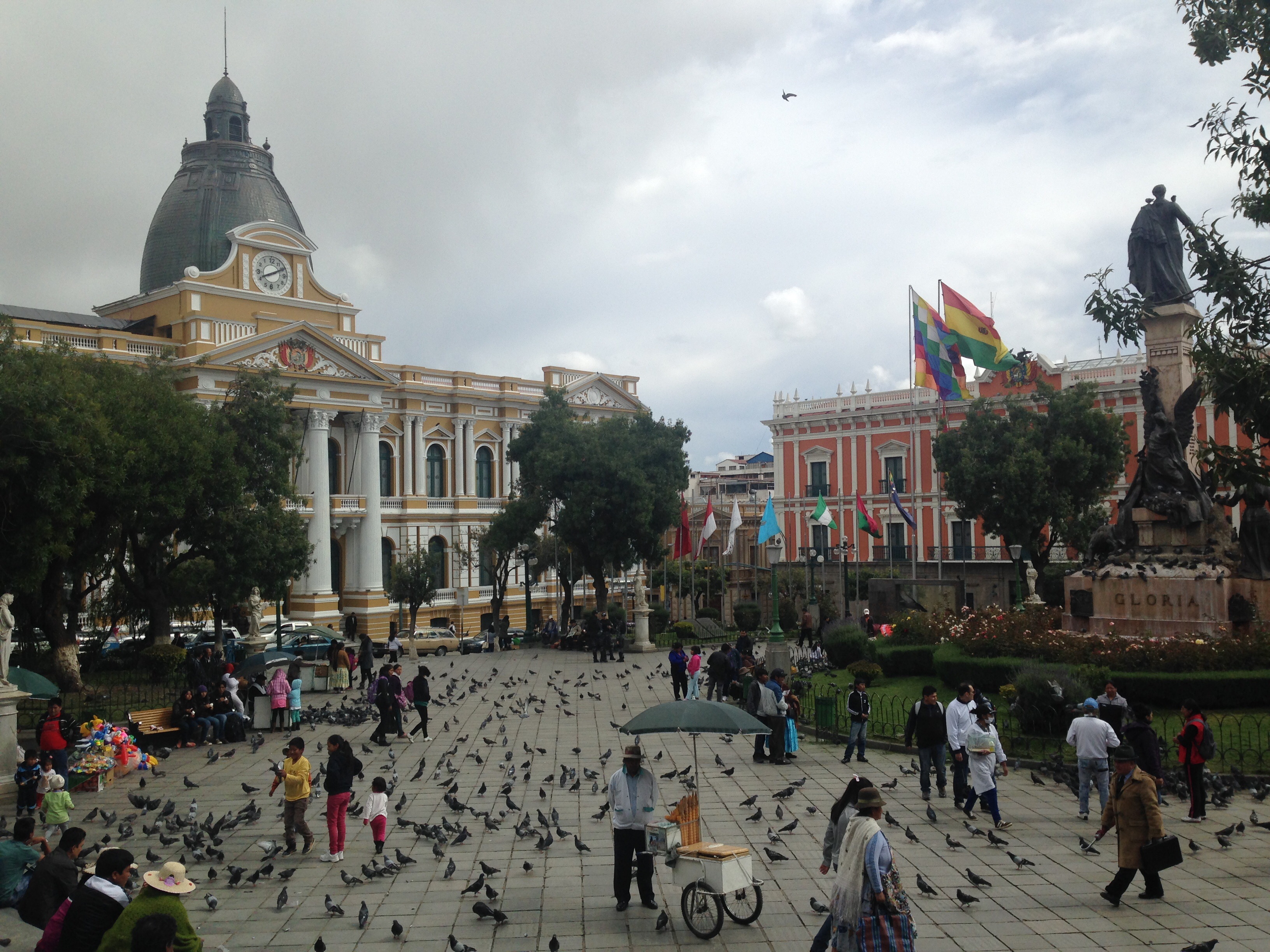
Prior to visiting La Paz we had only read terrible things about how unsafe it was. Lonely Planet opened its description of La Paz with a statement about how they couldn’t in good conscience say it was no more dangerous than other big cities (information we vowed to withhold from our mothers as long as possible). Crowded, chaotic, old ladies and police officers scamming us and stealing our dignity and passports; this is what we expected to find in La Paz.
We arrived in La Paz and were immediately presented with a contrast of this description when we stayed with two people who actually lived there, and compared to what we had read, lived like city “elite.”
First we Couchsurfed with a Swede named Niklas who has been in La Paz the last few years working for the UN and lives in a gated community in Zona Sur, the most affluent part of the city. We also stayed with Alex, a native Bolivian and friend of a friend who is a small business owner (and rugby player!) in La Paz. His top floor flat in the hip Sopocachi neighborhood gave us some of the best views of the city.
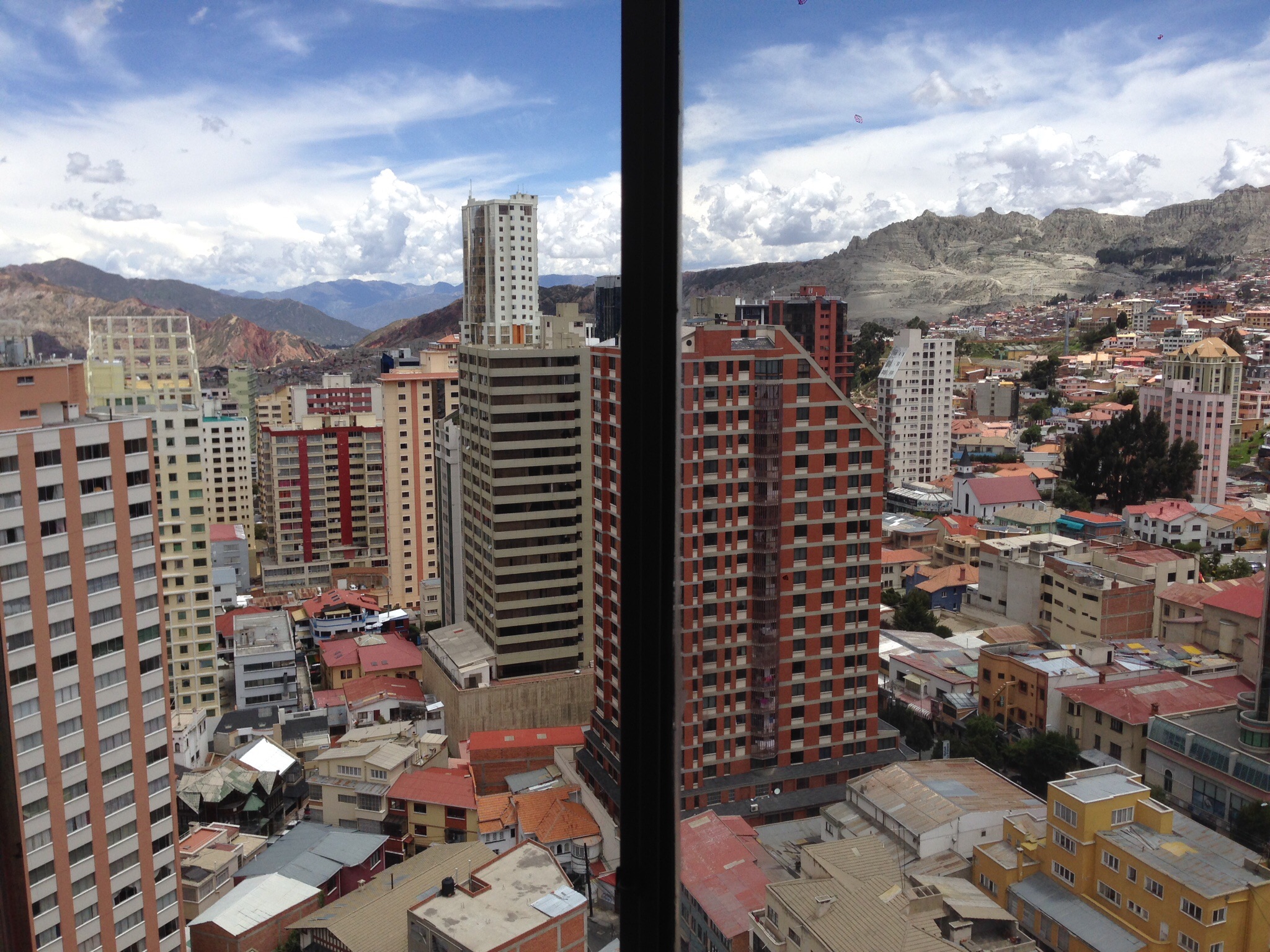
Both Alex and Niklas were extremely generous with their homes and their time, and we had some fascinating conversations with them about Bolivia and life in general. Although this didn’t feel like the “typical” La Paz experience, in some ways it seemed more authentic to see what life was like for locals that didn’t embody the stereotype we had in our heads of a third world Bolivian lifestyle. Turns out that even in a developing country you can always find a coffee shop with overpriced cappuccinos.
We did travel into the part of the city that more resembled what the guidebooks described, but we never felt unsafe there. What struck us about central La Paz was how much it felt like a “real” big city compared to many of the places we had been in Peru. We had been to big places, but tourism was such a prominent industry it sometimes felt difficult to grasp the real character of the city behind what was being presented.
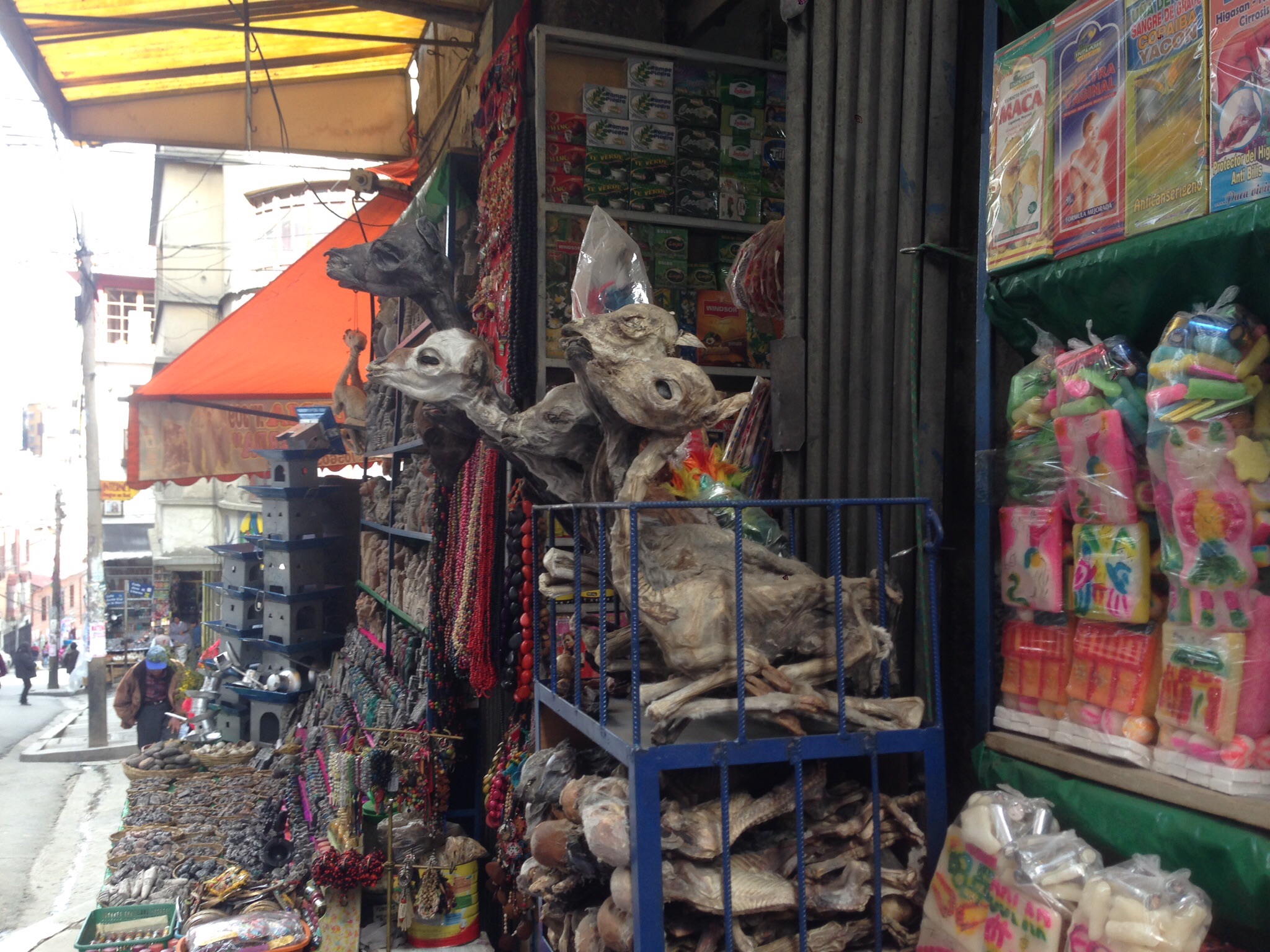
There is certainly tourism in La Paz, but somehow it seems like a smaller part of the overall vibe. Like the cities in Peru, there are tiny, crowded streets and sidewalks where you have to walk single file by vendors hawking goods; but in addition to street after street of identical alpaca scarves and woven handcrafts, there is some evidence of real life.
We got lunch one day at Mercado Lanza, a large building downtown with eating establishments jammed together in what seemed like shipping containers, each with a chalkboard sign displaying the meal being served that day. Each shipping container had a skinny table with packed benches, and a sink and stove right behind it where the cook/dishwasher/money collector stood (the same person often served all three functions). It took us some time to get up the gumption to pick one and cram our way onto a bench between the locals.
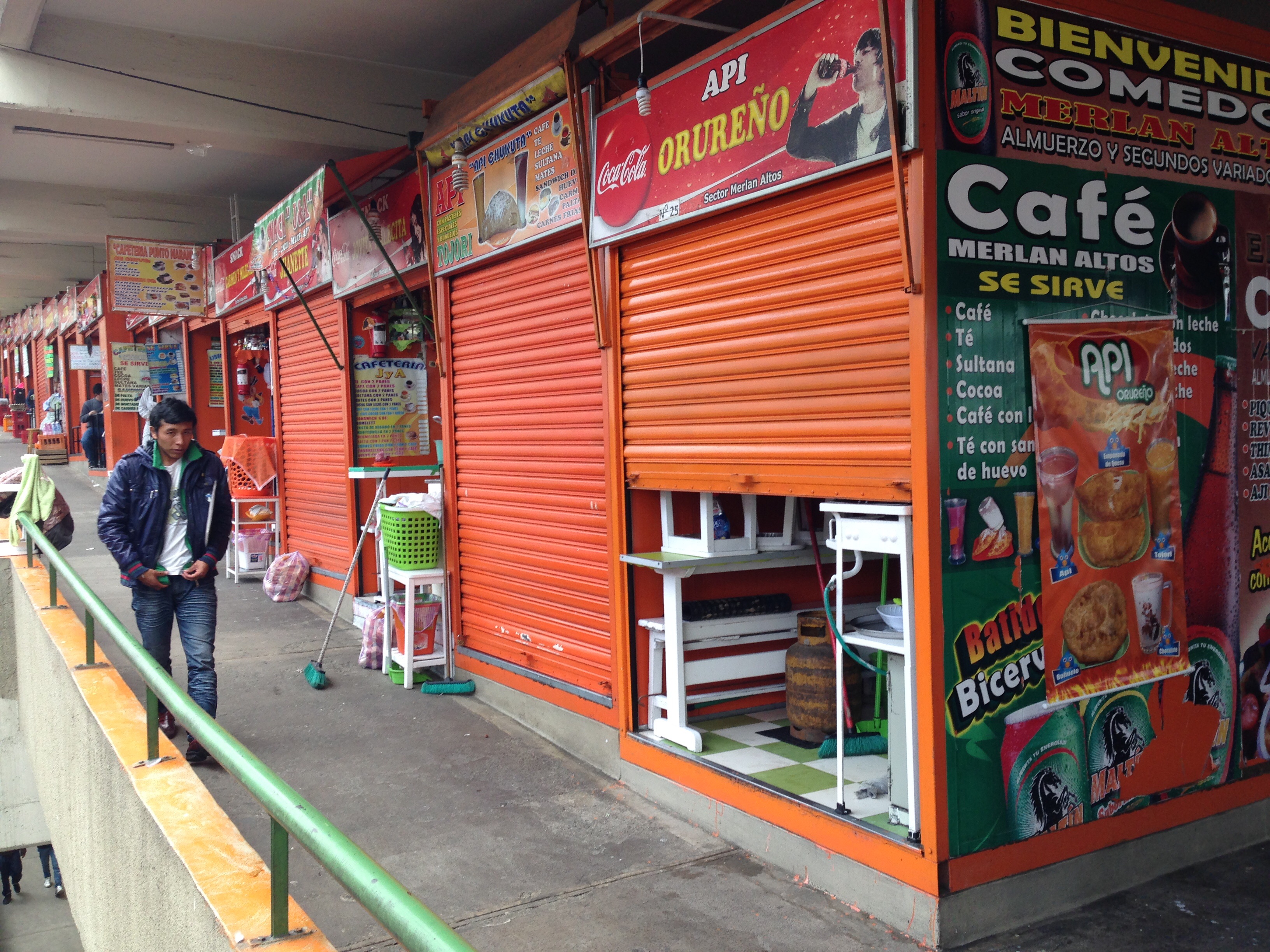
We had read that this market illustrates why McDonald’s has never made it big in Bolivia and our lunch was a live demonstration of this. After devouring meals of soup, rice and meat, we decided to try the donuts at a nearby stand; when these were a disappointment (never depend on a nostalgic treat from home to taste the same in another country), we bought and shared an enormous jugo con leche. Grand total of all eating activities: $4
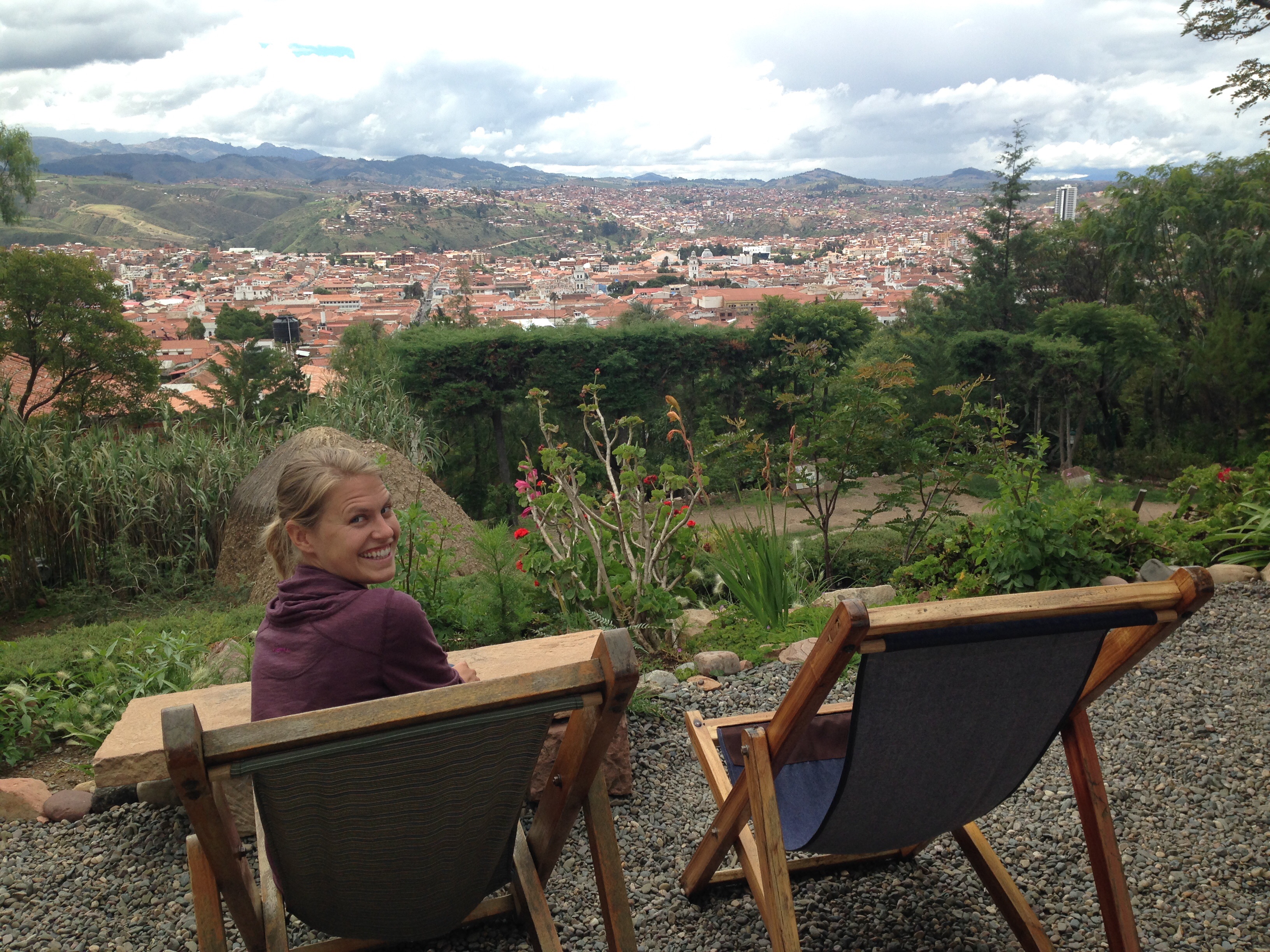
Since going to Bolivia was an afterthought we had an awkward amount of time to fill before our flight: enough that we felt guilty spending all of it lounging in the sweet homes of our new friends in La Paz, but not quite enough to experience one of the other beautiful places in Bolivia (the jungle, the Uyuni Salt Flats, etc.) We thought a good compromise was to spend a few days in Sucre, the “cultural capital” of Bolivia and a mere 12 hour bus ride from La Paz. The description of the colonial architecture reminded us of Arequipa which we really enjoyed, and there was a three day hike to a crater that we wanted to do.
Unfortunately, as is our pattern, one of us got sick and ruined everything, so we spent most of our time in Sucre recovering in the hostel. A lot of people ask us the “craziest” thing we’ve done so far, and I have to say that braving 20 hours of bus travel with stomach issues in vehicles without operational bathrooms and then doing nothing when we arrived is really up there.
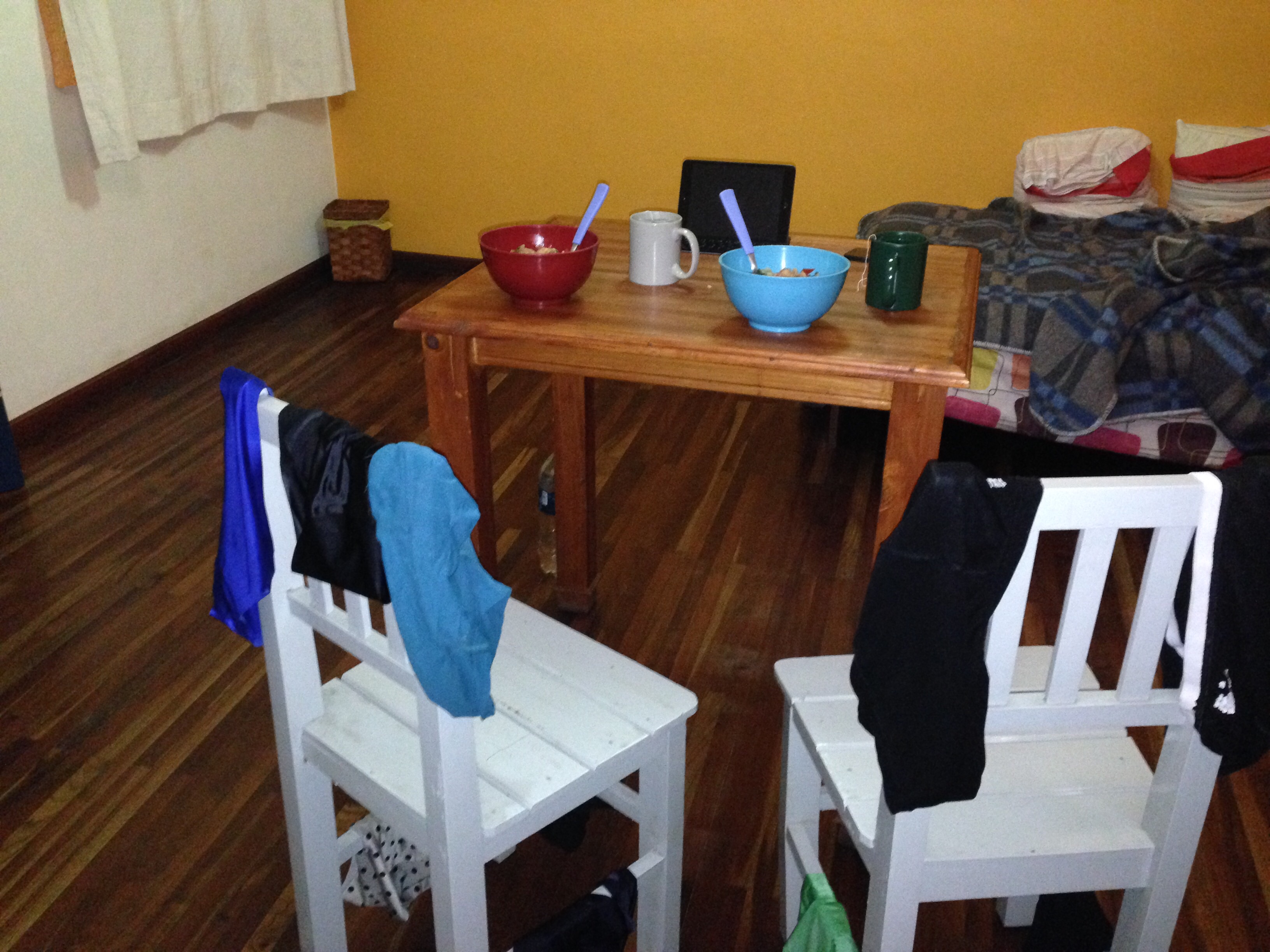
The silver lining is that we used our time in Sucre to plan parts of our Patagonia adventure which we will update you on soon!
(And if you’re tired of hearing about all our travel poo issues don’t worry – we are now in Chile and should be at sea-level in countries with potable water for the foreseeable future).
 The Traveling Blues
I would “like” this except I object to the part about withholding information from your mothers. Haven’t I explained “mother insurance” to you? As long as we’re actively worrying, you’ll be safe. 😊xoxo
LikeLike