


The directions we got to our first Workaway volunteering job in Peru were as follows:
“From Nazca, find the local van that goes toward Challa, tell the driver to drop you at kilometer 601, walk downhill for 30 minutes, knock on the brown door and ask for Alvaro.”
For non-Spanish speakers in a large, strange country, this seemed somewhat vague and daunting.
Fortunately a series of miracles occurred: we found the “local van”, which was actually a collectivo, a vehicle that takes you to a destination as soon as it fills with enough people. Then, the collectivo driver understood enough of our broken Spanish and arm motions to drop us two hours later in a tiny town called Santa Rosa de Atiquipa just after the 601 kilometer mark.
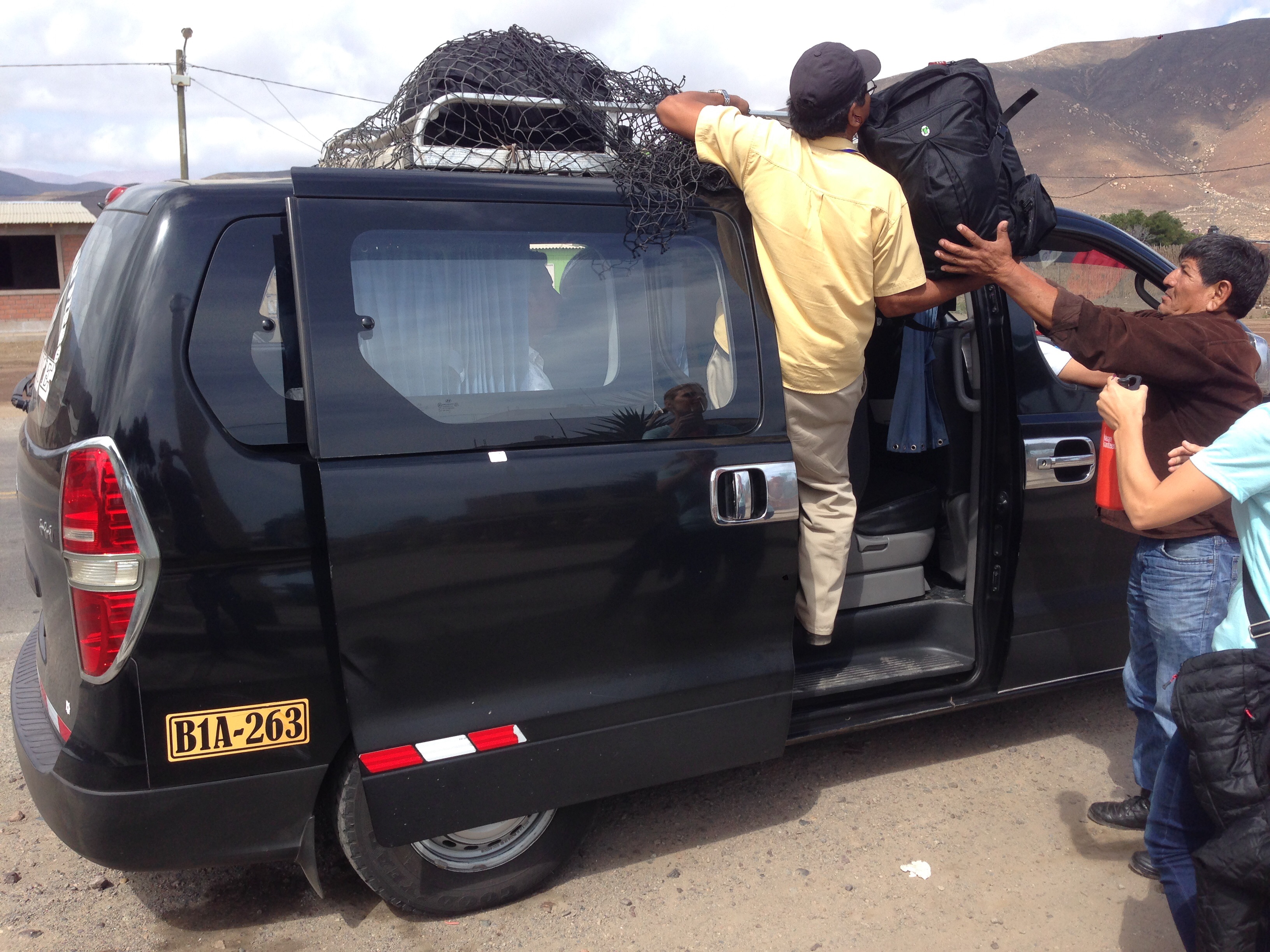
The “walk downhill” part was trickier as we appeared to be on a completely flat road when we arrived, but when we started walking back toward the entrance of town, a little dog with very short legs began trotting along beside us. There are stray dogs everywhere in Peru so this wasn’t unusual, but this one seemed so confident in where he was going that we followed him down a dirt road behind some buildings toward the ocean. We were pleasantly surprised to arrive at a brown door 30 minutes later, where a kind man named Alvaro with graying dreadlocks greeted us.
Turns out our guide dog, nicknamed “Cabezan” because of the large size of his head relative to his body, was a town dog that makes frequent visits to what would become our home for the next 10 days.
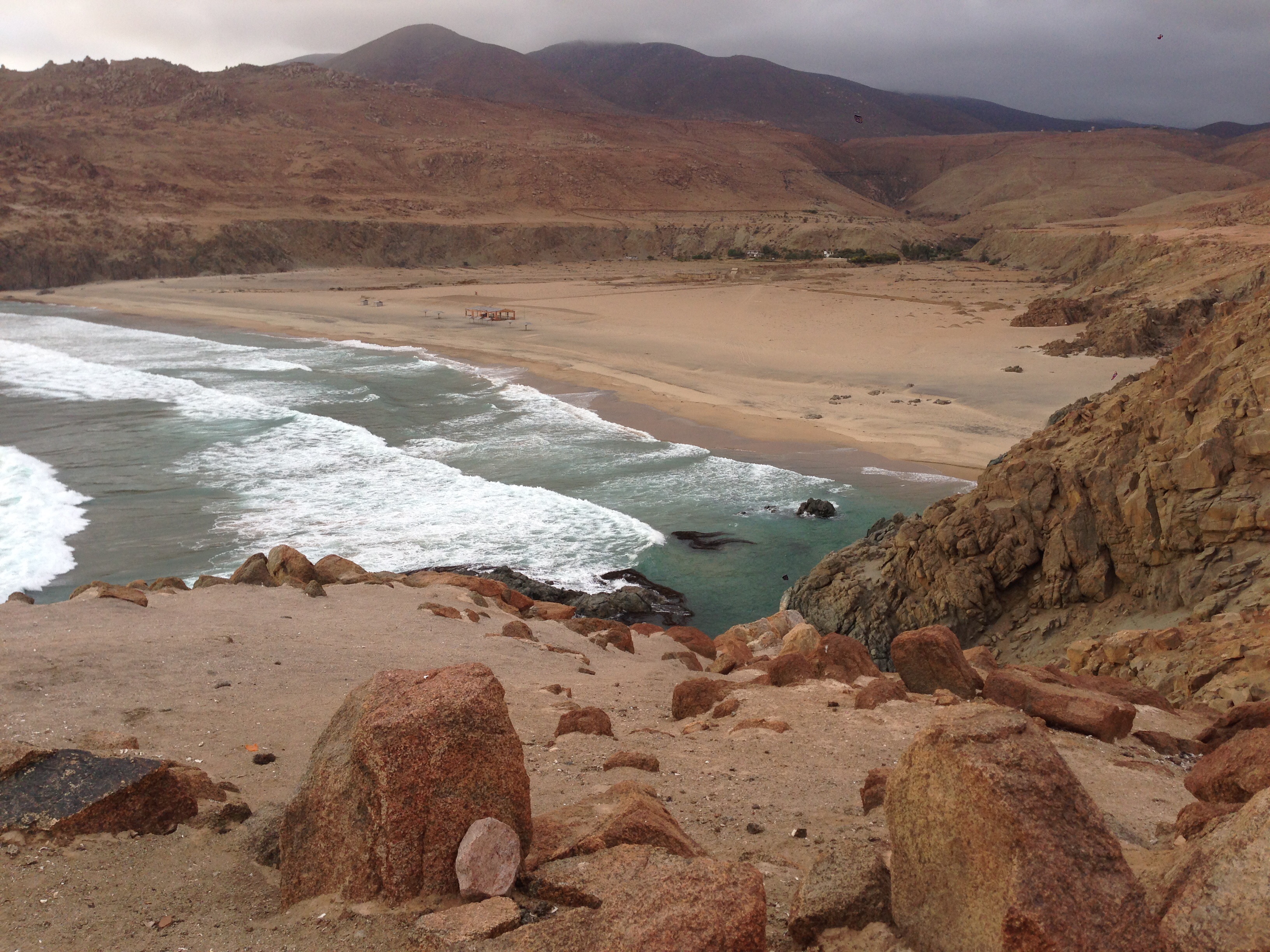
Working at Fundo Jihuay (pronounced Hee-why), a self-sustaining farm on the desert Peruvian coast was an amazing, peaceful experience. It had all of our favorite things (I’ll let you guess which ones are specific to Kristy):
Light manual labor
Regular, predictable mealtimes, always followed by tea and coffee
Lots of free time for reading, crosswords and naps
A completely empty beach for our running and swimming pleasure
Other midwestern volunteers, one who even went to the U of M(!)
Baby bunnies
Baby ducks
Baby chicks
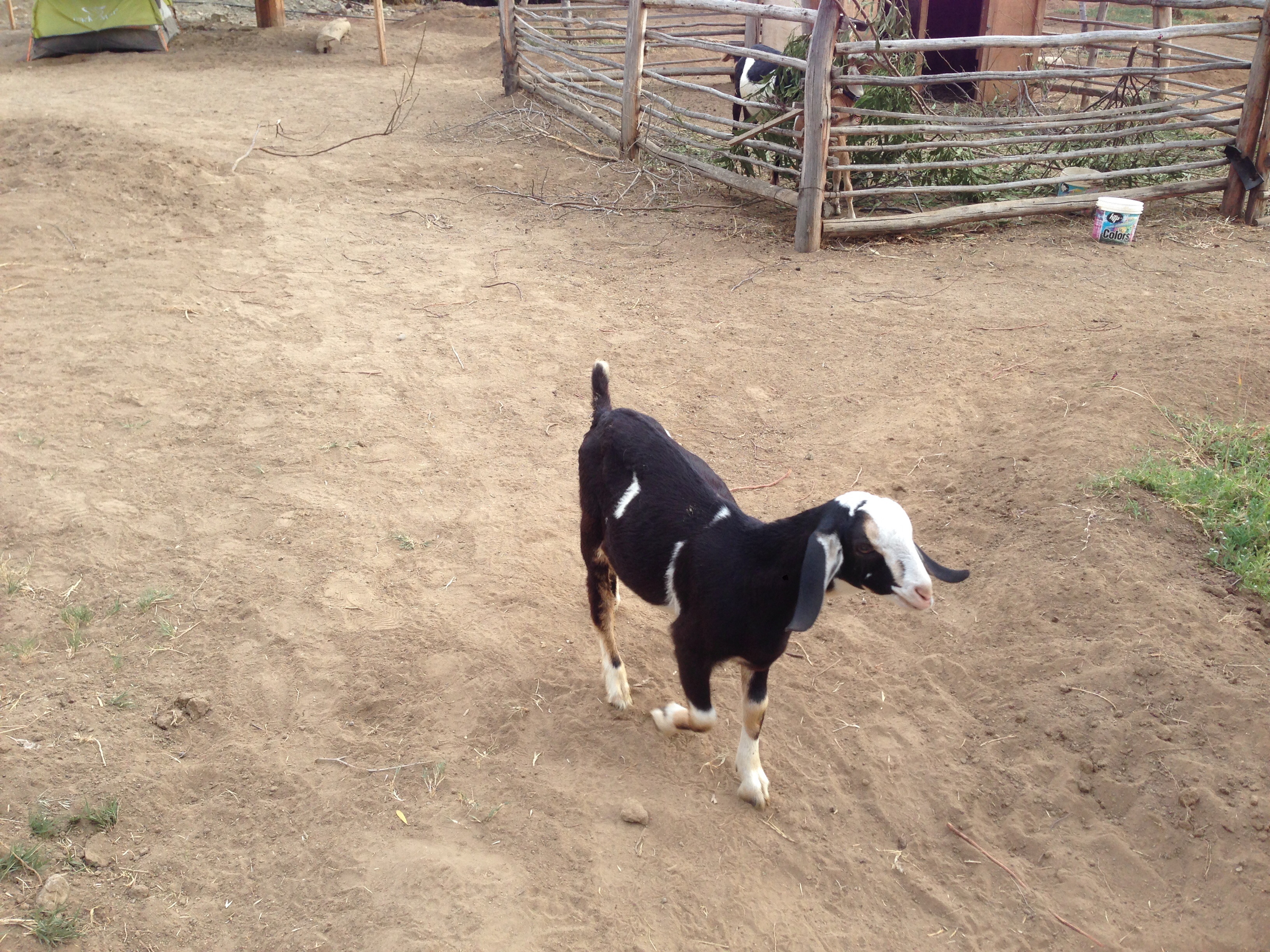
Baby goats
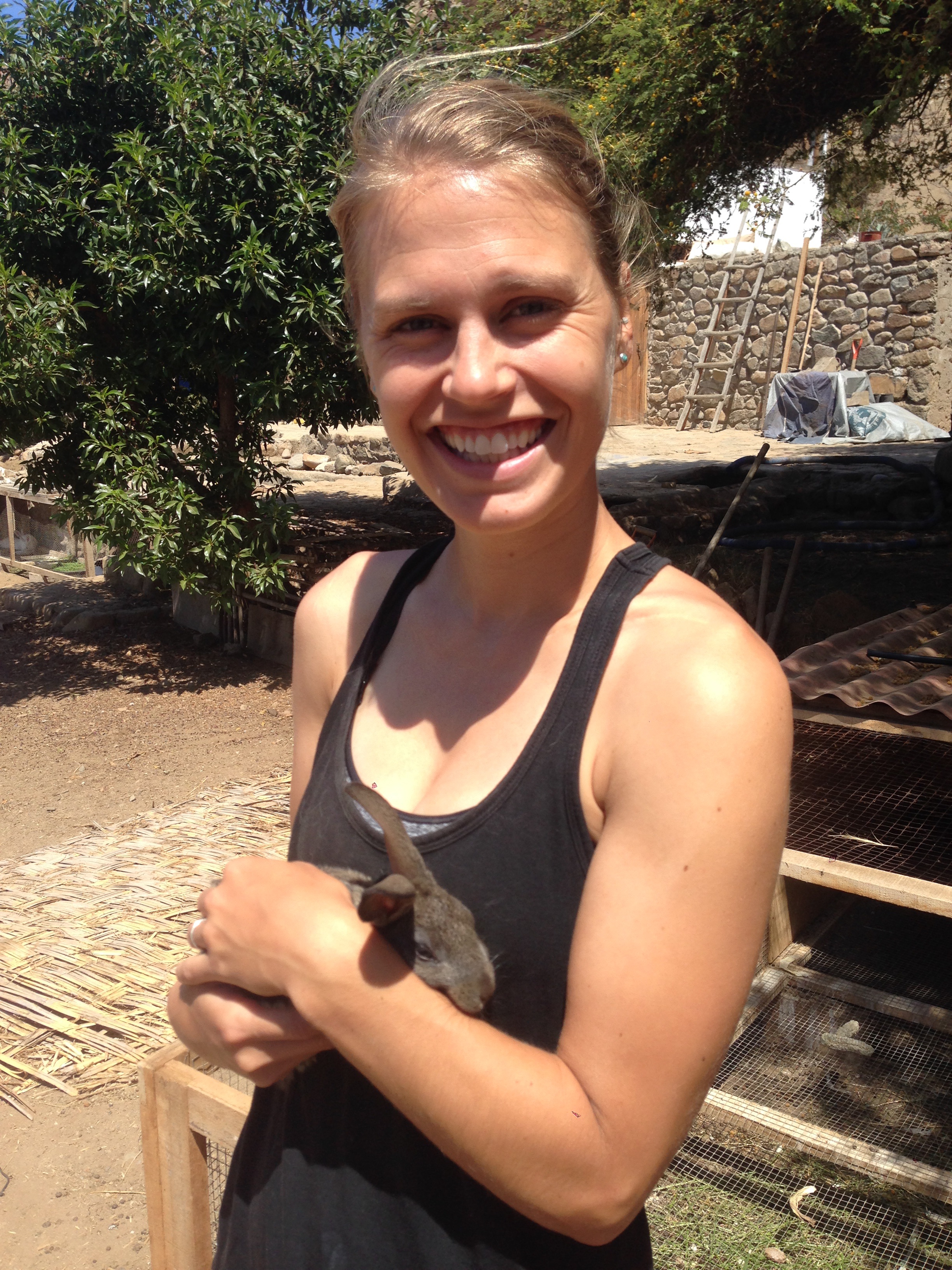
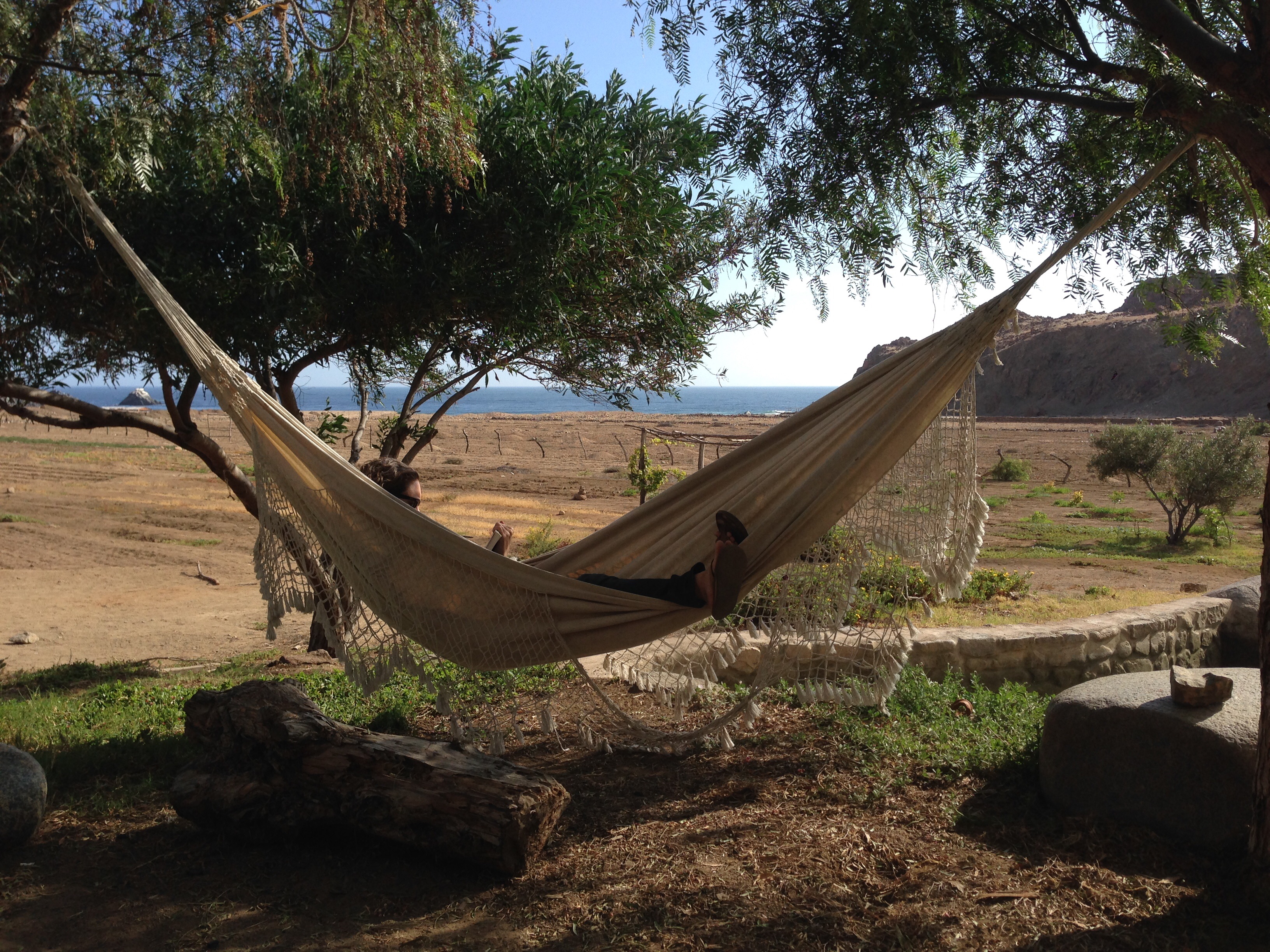
Our days usually consisted of work from 8-12 and then free time at one of the most beautiful places we’ve visited so far. There was no phone or internet there, so we got to do crazy throwback activities like reading books without intermittently checking Facebook, and exaggerating stories without anyone immediately fact checking us.
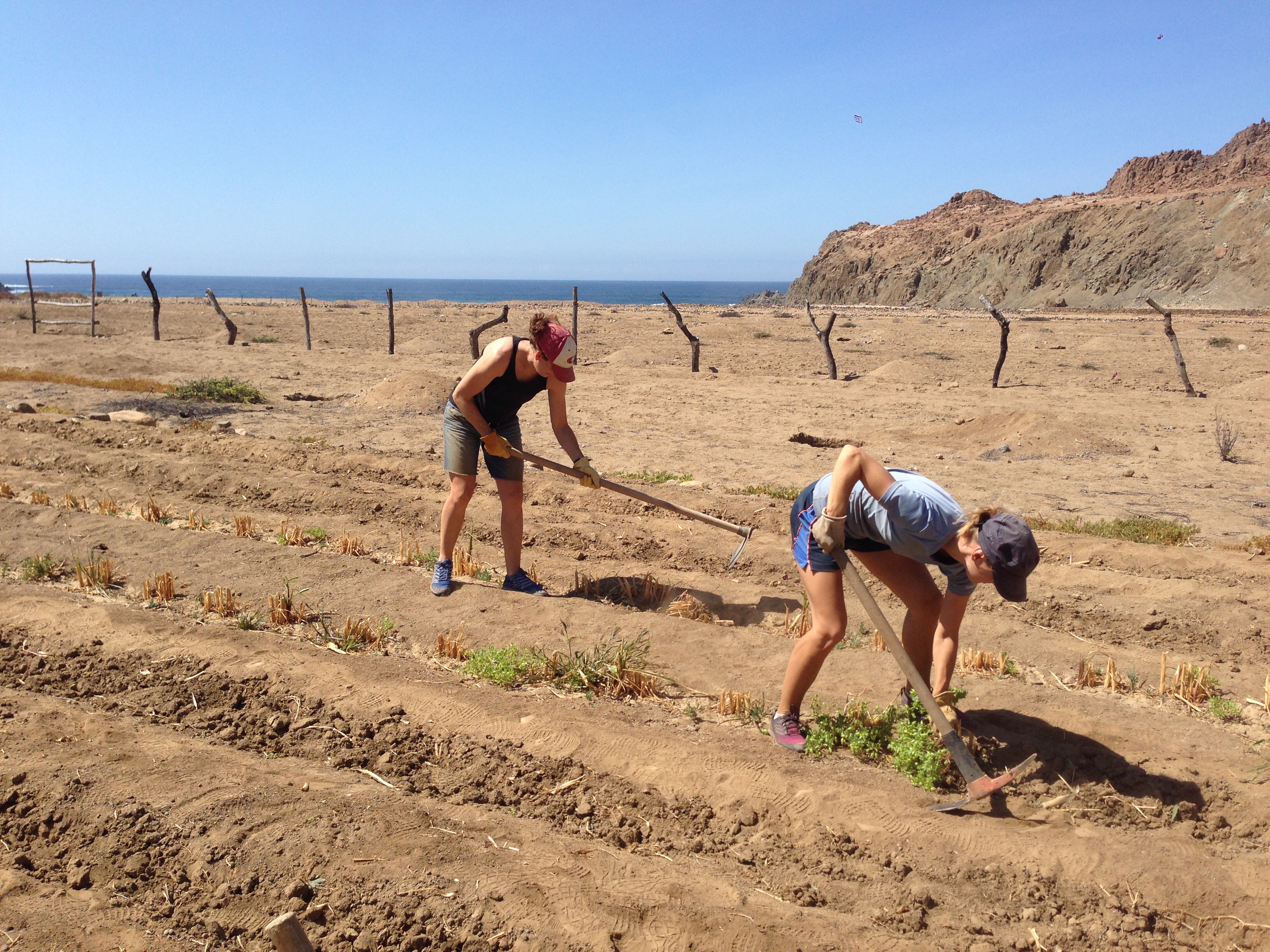
Work was usually a combination of watering, weeding and tilling, which I found very meditative. We did do two gross jobs. One was stirring the giant compost pits, which prompted a steady flood of escaping mice (probably punishment for our vigilant advocation of composting back at home). The other was cleaning the duck pond, a job we volunteered for because it sounded cute. Unfortunately the pond needs cleaning because the ducks crap where they swim, and carried on crapping in the pond literally seconds after we had finished scraping up last week’s excrement and refilled it. Even those jobs were hard to dislike in such a beautiful environment though.
Before and after meals we played cards and chatted with our hosts Alvaro and his girlfriend Jamie (also from the midwest!), and our fellow volunteers. While we were there, besides the midwesterners, there were volunteers from France, Slovakia, Wales and Taiwan. It was interesting to hear everyone’s worldview, particularly Alvaro’s, a native Peruvian who has lived through the worst of the terrorism, police corruption and other problems his country has experienced. Whenever Alvaro started a story, we were immediately riveted, because it would include sentences like:
“…they put me in jail for being a terrorist because I was wearing Wellington boots…”
“…our boss was on so many drugs that once he went to town to get us food and didn’t come back for three days. We had to stop working and start fishing…”
We also learned to drink pisco, the national drink, Peruvian-style (i.e. passing the bottle and a single shot glass around the table, saying “salud con todos” when it’s your turn).
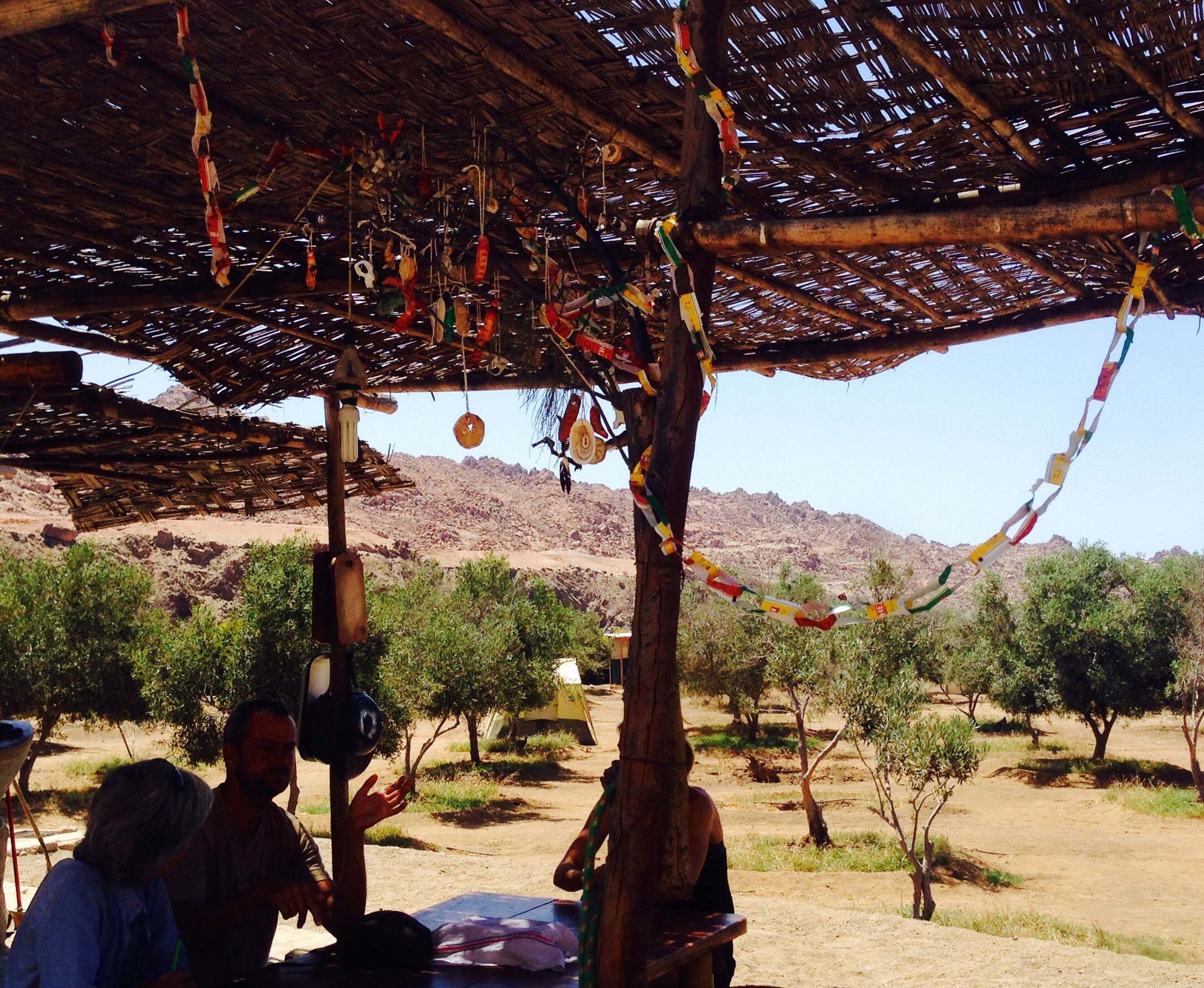
We spent our Christmas at Jihuay, grateful to be with a family of sorts. I didn’t realize how much I depend on carols on the radio starting in October, crowded malls and other such irritations to make it “feel” like Christmas until I spent a year without them. One of the volunteers set up a tree with ornaments from things she could find around the farm, and Alvaro slaughtered a goat for the occasion; still, in 80 degree weather without inflatable lawn decorations, it felt more like a party than a holiday, but we had a great time. And now I know how to butcher a goat, so there’s that.
Overall, the best thing about being at Jihuay was just being in one place and taken care of for a while. One of the toughest things about long term travel is that you have to put so much thought into your day to day necessities. It’s exciting, but it’s also exhausting to be thinking constantly about where you’re going to sleep or eat next, if you need to get water soon, how much you should pay for a taxi, etc.
Most Jihuay volunteers stay longer than they originally intend to, often extending a three day commitment into weeks or months because they’re reluctant to leave this bubble of easy comfort. We felt exactly the same, but we knew staying there was keeping us away from other adventures.
On our last day Alvaro dropped us at the top of the hill in his truck, and we were thrust back into reality. We now needed to figure out how to hitchhike to Challa and find a bus to our next destination. It all worked out, as it always does, but as we crammed into the first Arequipa-bound bus we could find, ready for six hours without a working toilet, and aisles and stairs loaded with standing passengers and food vendors, we couldn’t help but miss the Jihuay nest.
 The Traveling Blues
Hitch-hiking?
LikeLike
Was that your only takeaway!? 🙂
LikeLike
Haha! Of course not! Drinking shots? In crowded mini van (seat belts?), butchering baby animals? . . . JK, you know me, very laid back about it all. xoxoxo
LikeLike
Ha, so great. “It all worked out….as it always does.” The same in Southeast Asia. Not sure how these countries operated with the lack of infrastructure, but whenever you “find the local van that goes toward Challa, tell the driver to drop you at kilometer 601, walk downhill for 30 minutes, knock on the brown door and ask for Alvaro,” it just works 🙂
PS – dying laughing at your mom’s comment above. Laurie, it will be okay – I promise it always works out!!! 🙂
LikeLike
Quick, Andrea, tell my mom how much more dangerous it is to motorbike in Southeast Asia than hitchhike in Peru….I need a diversion! 😉
LikeLike
Marea, I seem to remember you rode a motorbike in Southeast Asia.
LikeLike
Hello!
Planning a trip to this farm this coming summer. If you could give some details on how exactly you made arrangements with the local taxi and bus that would be great! thanks so much.
LikeLike
Great to hear you’re visiting Jihuay! We had an amazing experience there, I hope you do too. Will you be coming from Nazca? If so, there’s a place in town collectivos going between Nazca and Challa depart from. We had a friend drop us there so unfortunately I can’t give you great directions, but I’m sure if you ask someone where the collectivos are they can help you find them. Tell the collectivo driver you want to be dropped at Santa Rosa de Atiquipa. Not sure if you’ve taking this mode of transportation before, but basically it’s a van that leaves once it’s full and makes a few stops along the way, so you may have to wait for a bit. Once they drop you in Santa Rosa de Atiquipa (super small) there’s a trail you can take downhill toward the ocean that will take you to the farm. Good luck, and enjoy!
LikeLike